

Slots bring together themed reels, symbols and features in a wide range of game formats. Some use paylines while others use ways-based combinations; wilds, scatters and bonus rounds can differ between titles. The game’s own rules and paytable describe the version being played.
Slot Titles and Themes
Slots reuse titles and visual themes across providers, and newer releases sometimes carry a suffix, a “Deluxe”, “Megaways” or a sequel number. The exact title on the help screen governs which paytable applies. Two games that share an artwork style can differ entirely in line structure, symbol values and feature triggers.
Useful habits when identifying a title:
- Record the full title as it appears on the game’s help page, including any suffix.
- Note the provider named on the game screen.
- Check the release or version marker in the help screen if one is shown.
- Treat the game ID or identifier in the help section as the authoritative reference.
Attributed external catalogue listings can help confirm that a title exists, but they are not confirmation of inventory on any particular site. The same caution applies to artwork: a thumbnail shows a theme, not reel count, RTP or feature rules.
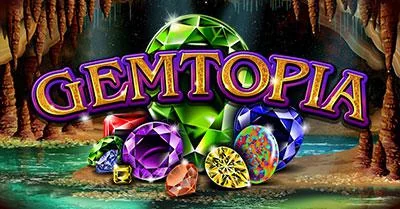
External visual examples sourced from a catalogue, clearly labelled as external references and not Batery inventory, include Cash Bandits 3, Gemtopia, Plentiful Treasure and the Icy Hot multi-game set. Titles and art alone establish none of their reel counts, RTPs or exact feature rules, and nothing in this article invents those specifications.
Reels and Symbol Combinations
A paytable maps a symbol arrangement to a payout. The layout depends on the game type: line-based slots pay for combinations along fixed or adjustable paylines, ways-based slots pay for adjacency from left to right (or sometimes both directions), and cluster or scatter-pay games work differently again. The paytable states which structure applies, and the stake basis: whether the values shown are for a per-line stake or the total bet.
The order of the paytable entries matters. Most games list the highest-value symbols first, then descending values, then the lower symbols. Reading the table from the top down gives the value hierarchy, and the line or ways explanation sits nearby.
An illustrative, fictional example makes the structure clearer. Imagine a generic paytable that says: three matching symbols along an active payline pay a multiple of the per-line stake, and matching runs count from left to right only. In that structure, a row of three similar low-value fruit symbols pays a small amount; a row of three upper-tier symbols pays more. The example is deliberately invented to show how the table works, and it promises no payout on any real game.
Two questions resolve most ambiguity:
- How many symbols must match, and in which positions?
- Are paytable values shown per line or for the total stake?
If either is unclear, the game’s help section is definitive, not the visual reel or a marketing description.
Wilds, Scatters and Features
Wild and scatter symbols mean different things across games, and version-specific rules apply. In general, a wild can substitute for other symbols to complete a matching result; whether it carries its own multiplier, substitutes only for some symbols, or extends a run differs by title. A scatter typically triggers something without needing to sit on a payline, and may pay in its own right. Bonus symbols often launch a feature round.
The procedural sequence matters when a round includes both wilds and scatters. Suppose a game’s help says a wild substitutes for all symbols except the scatter. In that game, a wild cannot stand in for a scatter to make the scatter count reach a trigger; the scatter must appear natively. A wild also cannot usually push a scatter total over a threshold. These are procedural constraints, not value judgements, and they vary by title.
Original fictional illustration: a game where three scatters anywhere on the reels open a free-spin feature, and wilds substitute for all symbols except scatter and bonus. Under those made-up rules, two scatters plus a wild is not a three-scatter trigger. That shows how reading the help first prevents mistaken expectations about a round.
Check the following before playing any title:
- Which symbols a wild can substitute for.
- Whether scatters must appear anywhere, on specific reels, or in a fixed order.
- How many of each symbol are needed to trigger a feature.
- Whether bonus symbols participate in line wins.
Feature rules, not graphics, determine what a round does. Two games sharing a wild mechanic may diverge in substitution limits and trigger minimums.
RTP and Volatility
Return to player (RTP) describes a theoretical long-run ratio of returns to stakes under the game’s mathematical model and stated rules. It does not predict the return from one round or one session. A finite sample can differ substantially from the theoretical value; no fixed number of rounds guarantees convergence. Check the exact version’s documentation for any stated figure and its assumptions. This article supplies no numeric RTP for a listed title.
Volatility concerns the spread and distribution of returns. It cannot be inferred from the speed of play or from one recent result. Suppliers may use different rating scales, so read a label beside that supplier’s definition and the exact game version. Hit frequency is a separate statistic; a volatility label alone does not specify how often a win occurs.
Expected value, another term in mathematical descriptions of slots, is the average outcome per round under the game’s design, and it is derived from RTP and the bet structure, not from a result in front of a player. Where documentation provides RTP or volatility figures, quote them as supplier-stated facts. This publication does not estimate or infer them, and does not present approximate figures as exact.
Practical consequence: a session record, however carefully kept, shows results in a sample. It cannot prove a future return, and a run of losses or a run of wins does not change the underlying distribution.
Slot-Game Catalogue Highlights
If you intend to compare slots properly, a short, structured record of where numbers came from is more useful than memory. Recording a source does not require specialist knowledge and need not follow a fixed format, but it should hold the details that let someone else check a figure later.
A useful entry covers:
- The exact game title and provider.
- The version or help-screen identifier.
- The date the paytable or help screen was checked.
- The location of the quoted RTP or volatility if the game states one.
- Any programme manual or supplier document that was used for rules.
Recording the version is important because supplier software can update. A paytable observed today may not apply to a title updated later. The help screen in the game is the authoritative source for the current version, and catalogue listings alone do not substitute for it.
Recorded results from sessions are separate from this record. Session results belong in a personal log clearly labelled as sample data; supplier documentation belongs in a source record. Mixing the two obscures the difference between a game’s design figures and a person’s own history.
Base Games and Feature Rounds
A feature round is a distinct state within a game, and its rules deserve separate reading. Free-spin features usually carry a fixed set of rules: the number of spins awarded, any multiplier that applies, and whether the wild symbol behaves differently during those spins. Some features retain state across spins, such as an expanding wild or a persistent multiplier; others reset each spin.
The distinction between the base game and a feature round matters because paytable values often differ in each state. A slot may show one set of symbol values in the base game and a different, more generous set during a free-spin feature. Reading only the base-game paytable and assuming those values apply to the feature is a common oversight.
Also note how features are entered and completed:
- Whether the feature is triggered by a fixed number of scatters or by other means.
- Whether the feature can be retriggered, and under what conditions.
- Whether any feature state persists from spin to spin.
- Whether the game documents a maximum win or a feature limit.
An original, invented example: a game where three scatters award ten free spins and a persistent multiplier begins at x1 and doubles for each scatter landed during the feature. That example is made up to illustrate the kind of structure some games use; it is not a description of any listed title.
Slot Titles and Their Features
The tables and examples in this article are illustrative structures, not reproductions of any provider’s documentation. When a game is listed, its actual paytable and help screen replace the illustrative versions. Reel count, symbol set, line or ways structure and feature rules all vary by title, and the catalogue listing names a game without supplying those details.
A compact comparison of the questions to ask in each case is useful:
| Question | Illustrative example | Listed title |
|---|---|---|
| How are wins formed? | Left-to-right paylines, invented | As stated in that game’s paytable |
| What do wilds substitute for? | All symbols except scatter, invented | As documented per title |
| How is the feature triggered? | Three scatters anywhere, invented | As documented per title |
| Is RTP stated? | Not applicable | Only if the supplier documents it |
| Volatility | Not applicable | Only if documented |
This table promises no outcome; it lists the questions and points back to the game’s own documentation for answers.
Payments and Accounts
This independent page covers gameplay and reading practices. Account creation, login and payment are not connected here, and the login and register panels described elsewhere are disconnected UI previews rather than working services. Any payment method or deposit timing discussed on a brand description page belongs to the brand’s own terms.
Offers and Terms
Promotion terms are a separate topic from a game’s paytable. The offers information page records the source-attributed headline and the conditions that remain unconfirmed. A game catalogue entry does not establish which title, if any, a promotion covers.
Sources and Verification
The game rules described here follow general stable conventions plus the supplied source set. Version-specific rules, RTP figures and volatility values are supplier-stated and have not been independently confirmed for any particular title. Where this article gives a figure, it is quoted; where documentation does not supply a number, no estimate is made.
- General slots structure and textbook descriptions of RTP, volatility and expected value: Sunrise Slots external catalogue, used only as an external visual reference for listed titles, not for specifications.
- Independently sourced reference titles: Jackpotter external catalogue, used only to confirm titles, not availability.
No portion of this article should be read as a claim that any listed game is available on Batery, as a promise of return, or as advice on choosing a game by financial situation.